‘I would have liked certification 4 years ago.’
‘Nobody mentioned it until I was about to be discharged from HES’
‘I wasn’t offered certification. I was never offered it.’
Do we offer certification to our patients when they are eligible? Or do we assume that SOMEONE ELSE will do this, only to find out that SOMEONE ELSE is called NOBODY?
This blog contains quotes from patients who I interviewed about this topic. Written consent was obtained to include their quotes here.
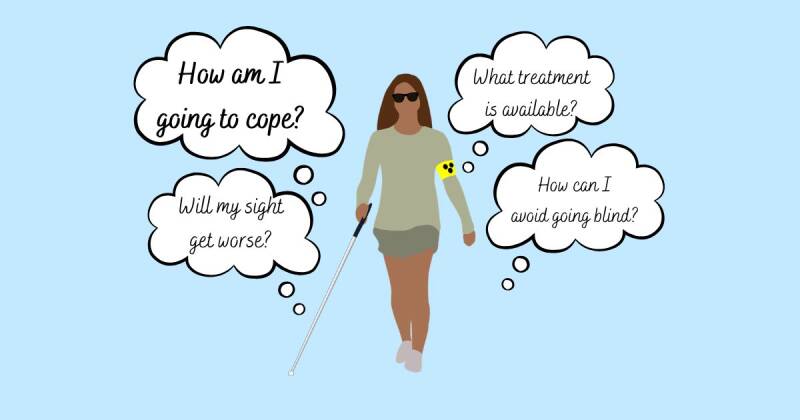
Timely intervention and support has a significant impact on a person’s ability to cope with vision impairment. This includes offering sight impairment certification as soon as the patient is eligible. But is also includes signposting to sevices such as low vision clinics, sight loss charities and peer support groups. Patients are infinitely grateful to the practitioner who takes an interest in how they are coping. We need to remember that patients may feel anxious and wonder how they will cope when their vision is getting worse:
‘All they did, was doing the medical bit. The doctors are not interested in daily living. They don’t react to the fact that actually, life is a bit alarming.’
‘That’s the biggest upset, actually; that nobody talked to you or explained what was happening. I went for my injections and my scans. The person doing the scan didn’t tell me if things were worse. They just said you’ll hear from the doctor, and you then just get a one-liner. I felt that there was not enough support for people coming for their injections…’
‘I actually to speak [with someone] about certification...I was keen to receive any help that was available, because I was beginning to feel I was not coping… and it comes with a bit of fear when your sight is gone and you panic: ‘When is this going to stop?’ You can’t do the hobbies that you used to do… I did get a bit depressed… The big problem was that I was not well informed. I felt that when I attend the clinic, you don’t get] a chance to speak to anybody. And that’s it: Good bye! And nobody will liaise with you. I would have liked certification 4 years ago.’
The challenge we face in our busy clinics is that we have very little time to talk with our patients. And yet, this is the lack of communication and information-sharing is what patients regret the most about their eye appointments. I recommend asking every patient if they are experiencing any difficulties because of their eye sight. If the answer is ‘yes’, I would check their eligibility for certification and sign-post to sight loss charities, low vision services and peer support groups.
Magnifiers often mean that patients can stay independent for longer, enjoy their hobbies for longer, cook healthier meals, and continue to engage socially. It reduces their level of frailty, protecting their health and well-being.
The patient support service can help patients to know what to do when they are no longer able to cope, which means that they are better prepared for future sight loss.
The macular support groups are a life-line for many patients in terms of emotional support:
‘I attend the meetings from the macular society. It is marvellous. You get to meet other people. It is amazing what we have picked up from each other.’
‘The smaller support groups were better for talking about our problems. That was emotional support for me. There were other people who were prepared to talk about it.’
Don’t wait until your patients ask you about available support or certification, but actively offer this to your patients!