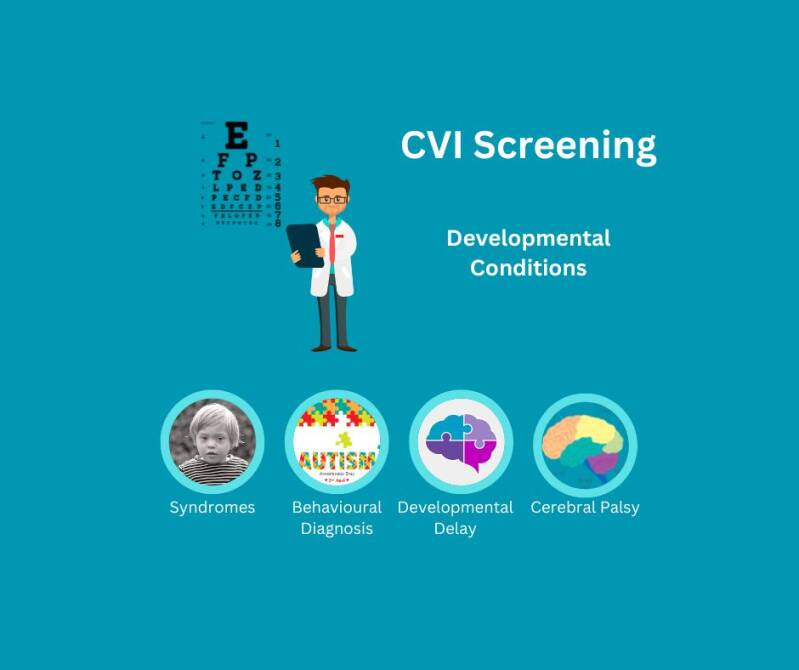
Down’s syndrome, cerebral palsy, general developmental delay, autism, ADHD and many more neuro-developmental conditions and behavioural diagnoses are associated with difficulties in seeing and interpreting the visual world, also known as cerebral vision impairment (CVI). Because of the high prevalence of CVI in children with additional support needs, it is particularly important to take any parental concerns about their child’s vision seriously, including when the sight test was normal. Optometrists have a unique opportunity to identify children at risk, and to refer those children for screening and/or a comprehensive CVI assessment.
CVI diagnosis and the role of the Optometrist
There is currently no international consensus regarding the diagnosis and management of CVI in children. For this reason, one can expect variability in the process of diagnosis and the criteria used by different clinicians and diagnostic centres. As an Optometrist in the UK, I do not get involved in providing parents with a clinical diagnosis for their child. The aim of my CVI clinic is to help parents understand their child’s visual difficulties and to offer adaptive strategies to support children’s learning and development.
Behavioural label versus CVI
Children with CVI may display behaviours and difficulties that are commonly attributed to an overarching behavioural label, such as ADHD, dyslexia or ASD. Whilst it can be helpful to have this overarching label, in order to receive funding for support at school, this label does not provide an explanation for the behaviours and difficulties. Yet, we know that brain networks and functions in the visual area of the brain are often involved in these conditions. When the underlying cause for the behaviours and difficulties is understood, one can offer more targeted support strategies. Let me give you an example:
A child has dorsal stream dysfunction, rendering it difficult to get an overview of their visual surroundings. They only appear to focus on one visual element at a time, and they are unable to control where they are looking. If this child is unable to locate their friends, this can impact their social interactions. This child may find it hard to follow the lessons, especially when they are required to switch attention between the text book, the teacher and the board. The child may insist that their toys need to be stored in the same place, or may line up their toys to facilitate visual search. When trying to read, especially when the text is crowded or there is a lot of information on the page, the child may struggle to navigate through the text and to stay focussed.
Can you see how CVI can lead to particular behaviours? If you want to know more, you might want to read my CVI blogs:
If you see a lot of children with additional support needs in your practice, I would love to hear from you to see how you can get involved in CVI screening, so that affected children can receive a comprehensive (online) CVI assessment.
Contact Cirta Tooth: